CITY LIVING / KLCC VS TRX
KLCC or TRX: which city address fits the way you live?
Both put you close to central Kuala Lumpur. The better choice usually comes down to the street you want to return to, the route you repeat and whether you prefer an established building or a newer district still taking shape.
Start with the part of the city you will actually use.
KLCC is not one uniform walking environment. The park side, Jalan Kia Peng, Jalan Stonor and Jalan Ampang approaches feel different after office hours, in heavy rain and when traffic builds. TRX has its own split between the office-and-retail core, Jalan Tun Razak and the Cochrane edge. A project can carry the district name while serving a very different daily route.
Write down the two city destinations you expect to use every week. Then test the complete journey from each residential lobby—not the straight-line distance on a map. Include the lift, crossing, shade, covered portions and the final walk after dark. The district that removes more repeated friction deserves to lead the shortlist.
A completed building can replace several assumptions.
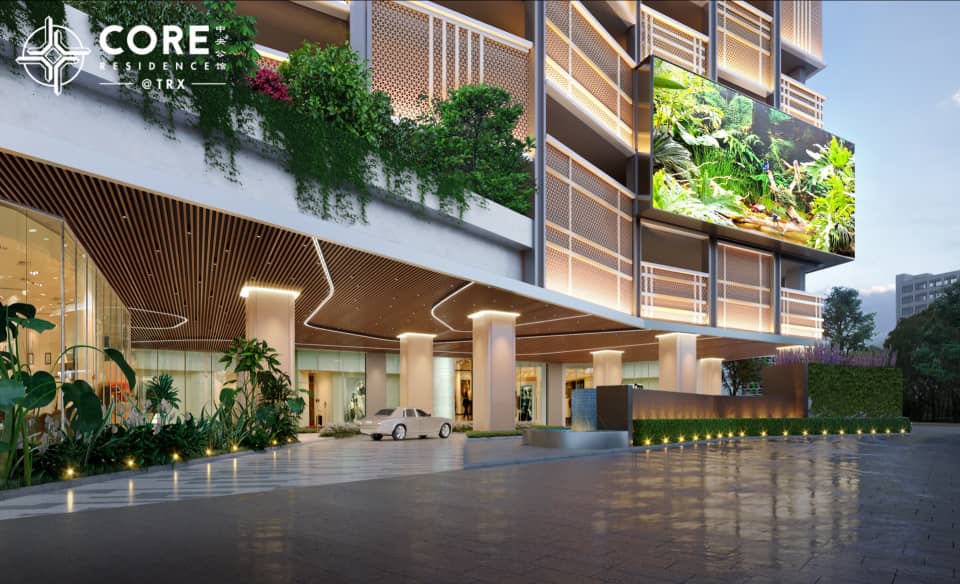
CORE Residence, Eaton Residence and other completed choices let you inspect the actual lift journey, arrival, view, traffic noise and condition of common areas. You can stand in the bedroom, check afternoon heat, open the windows and see whether the route from parking to the home feels natural. Those answers are more useful than a general district reputation.
Future projects offer a different timeline and may bring newer plans or specifications, but their promise should be compared against the finished reality nearby. If your moving date is firm, keep completed and future choices in separate columns. That prevents a newer presentation from quietly becoming more important than your actual timing and cash-flow needs.
City layouts need to earn every square foot.
Compact one- and two-bedroom plans can work well when storage, kitchen ventilation and bedroom width are sensible. At CORE, the familiar Tower 1 and 2 range runs from 624 to 1,022 sq ft. KLCC choices can start at a similar compact size but may extend into much larger family homes. Those upper plans belong in a separate comparison rather than one continuous price ladder.
Compare like-for-like bedroom counts and mark the spaces that must work: dining, work from home, luggage, guests or a second household member. Measure the walls needed for a bed, wardrobe and sofa. A “+1” only helps if it has usable width and privacy; a larger plan only helps when the extra area creates better rooms instead of circulation you will pay to furnish.
| Decision | KLCC starting point | TRX starting point |
|---|---|---|
| Daily route | Park, Conlay, Kia Peng, Stonor or Jalan Ampang side | TRX core, Jalan Tun Razak or Cochrane side |
| Maturity | Broader completed-building and street references | Newer financial-district setting still evolving |
| Rail test | Exact route depends strongly on the project entrance | Kajang and Putrajaya MRT interchange is central |
| Project sample | Eaton Residence | CORE Residence and TRX Residence |
| Best next step | Walk the actual KLCC destinations you use | Test the interchange, mall and office route from the lobby |
Rail access is only valuable when it improves the correct journey.
TRX has a clear transport proposition through the Kajang and Putrajaya MRT interchange. That can be highly useful when the household repeatedly travels along those lines or works within the district. Test from the residential entrance to the correct platform, including mall opening hours, vertical circulation and the route used when a preferred connection is closed.
KLCC projects relate differently to rail depending on whether they sit nearer Conlay, Persiaran KLCC, Ampang Park or another edge. Do not compare station names alone. Time one complete weekday journey from each actual building, then test the return at the hour you expect to come home. A slightly longer walk can still win when it serves the right line and destination.
Choose the street you want outside the lobby.
KLCC offers a more established mix of hotels, offices, residences, embassies, park edges and older commercial streets. The atmosphere changes quickly from one block to the next. TRX is more concentrated around a newer office, retail and public-realm core, with surrounding edges that connect into Bukit Bintang, Imbi and Cochrane in different ways.
Visit at three useful moments: weekday morning, evening after work and a weekend afternoon. Look beyond the attractive destination and observe crossings, active frontages, ride-hailing pick-up, grocery trips and the final hundred metres home. The right city address is the one whose ordinary street life feels workable when there is no appointment or showroom welcome.
Compare tenure and operating costs at the unit level.
Both districts contain freehold and leasehold choices. CORE is recorded as freehold, while Eaton is recorded as leasehold. Keep tenure visible if holding period and future buyer preference matter, but place it beside the exact price, unit condition, parking, management charge, sinking fund and likely work after purchase. The label cannot settle those costs for you.
Create a five-year ownership view for the two units that actually fit. Include purchase and financing costs, furnishing or renovation, recurring building charges and the cost of waiting where completion lies ahead. Avoid comparing the smallest advertised unit in one project against the practical family plan in another. The budget comparison must solve the same household need.
A city residence is also an operating system.
Ask how residents, visitors, deliveries and hotel or commercial users move through the development. Confirm the residential entrance, lift zones, parking route and whether any facilities or services are shared. In a completed building, observe those systems directly. In a future development, request the applicable plans and operating explanation for the exact component.
The rooftop view may be memorable, but the repeated experience begins at the guardhouse and lift. Visit at a busy time and note whether the arrival remains clear. For completed homes, request current management and sinking-fund information from the seller. For future homes, understand what is confirmed, what is indicative and what may carry a separate charge.
Use one viewing sequence so the comparison stays honest.
View the two strongest homes on the same day if possible. Arrive using the transport mode you expect to rely on, travel from the entrance to the unit, spend quiet time in the main bedroom and living room, then walk one weekly destination. Photograph only the details you need to compare: window outlook, storage, kitchen, bathroom sharing, parking and the return route.
Write notes under the same headings before moving to the next project. Do not score the lobby more heavily than the home, or the home more heavily than the surrounding week. If one project needs a future completion assumption, state it clearly beside the observed evidence from the completed alternative. This prevents a polished idea from being compared with an imperfect but real unit.
Build a three-home shortlist with different jobs.
Use CORE Residence to understand a completed TRX option, keep TRX Residence as a district reference, then place a completed KLCC choice such as Eaton Residence beside them. If a future KLCC launch is relevant, add it only after the household has decided that its completion timing and exact plan serve a purpose the completed homes do not.
Give each finalist a role: best daily route, best plan and best total ownership fit. If two homes serve the same role, remove the weaker one. The point is not to declare KLCC or TRX the universal winner. It is to expose which trade-off your household can live with and which actual unit deserves a second appointment.